Social Growth
TheSequence Organic Social Growth
Growing a technical AI/ML newsletter's X (Twitter) account from fewer than 700 to 46,000 followers without paid promotion.
Context
When I joined TheSequence in January 2021, it was an independent, six-month-old AI/ML newsletter serving practitioners, researchers, and aspiring professionals worldwide. The newsletter had no substantial social presence. Its X account had fewer than 700 followers, and the brand had limited recognition.
Objective
Build awareness of TheSequence within the AI/ML community and establish a repeatable content system for sustainable organic growth on X.
My role
I joined TheSequence as a Social Media Marketing Specialist and initially worked closely with a co-founder to test formats and calibrate the publication’s voice. I later assumed end-to-end ownership of X, covering content strategy, research, creation, publishing, experimentation, performance analysis, and reporting. The co-founder remained involved through weekly reviews and strategic input. Toward the end of my role, I also helped launch the publication’s LinkedIn presence.
Constraints
- Authority-driven market: Established researchers, engineers, practitioners, and organizations dominated AI/ML conversations on X. A new publication account had to earn attention without relying on existing authority or social proof.
- Technical audience: The audience valued accuracy, relevance, and substantive insights, leaving little room for generic promotional content.
- No established social media system: No proven content formats, publishing practices, or historical performance benchmarks guided the strategy.
- No paid distribution: Audience growth had to come entirely through organic content and participation in relevant conversations.
Approach
1. Turning newsletter research into standalone social content
TheSequence’s three weekly editions provided a regular source of material. I developed a repeatable workflow for adapting that material into social media content. Each post offered useful information on X without reproducing the paid newsletter. Where relevant, it linked to the publication for readers who wanted a deeper explanation. This kept social content connected to the newsletter while giving people a reason to follow the account on its own.
2. Reaching audiences through earned amplification
I monitored research releases, company announcements, expert talks, and relevant industry conversations to identify timely publishing opportunities. Posts summarized developments and credited the researchers, companies, and institutions involved, giving those accounts a reason to engage with or reshare the posts and extending TheSequence’s visibility beyond its existing followers. I supplemented this with occasional direct outreach, community collaborations, and cross-promotions.
3. Using weekly reviews to refine publishing decisions
Follower growth was the primary account-level measure. At the post level, I used profile visits as the main proxy variable for follower growth and audience interest in the publication. Other metrics like impressions, reposts, bookmarks, engagement, and link clicks provided additional context and helped me identify post features and formats that optimized performance for these metrics.
Each week, I reviewed both strong performers and posts that fell short of expectations, looking at topic, format, framing, copy structure, and visuals. I used those findings to adjust the following week’s content mix, refine recurring formats, and retest promising ideas.
Selected posts
I tested recurring formats including research roundups, weekly AI updates, hiring digests, and curated collections of books, courses, and technical resources. The mix combined timely developments with evergreen learning resources, giving readers several reasons to follow. As the approach developed, I scaled publishing to up to three posts per day and documented the publication’s social voice and editorial conventions in a content guide.
The examples below show several representative formats. Performance figures come from account analytics and are not displayed in the public post screenshots.
These posts were published during my work at TheSequence. The account is now presented under the Turing Post name, so the current X links use that handle.
Popular AI/ML courses: year-end roundup
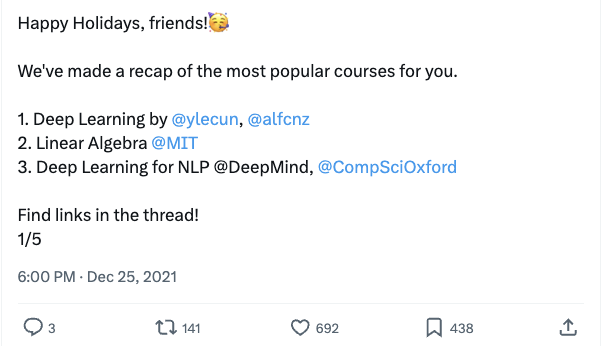
A seasonal collection brought useful learning resources together in one timely post and demonstrated the reach potential of resource curation.
- Format
- Curated learning resources
- Purpose
- Audience discovery
- Reported performance
- ~161K impressions
Three free books
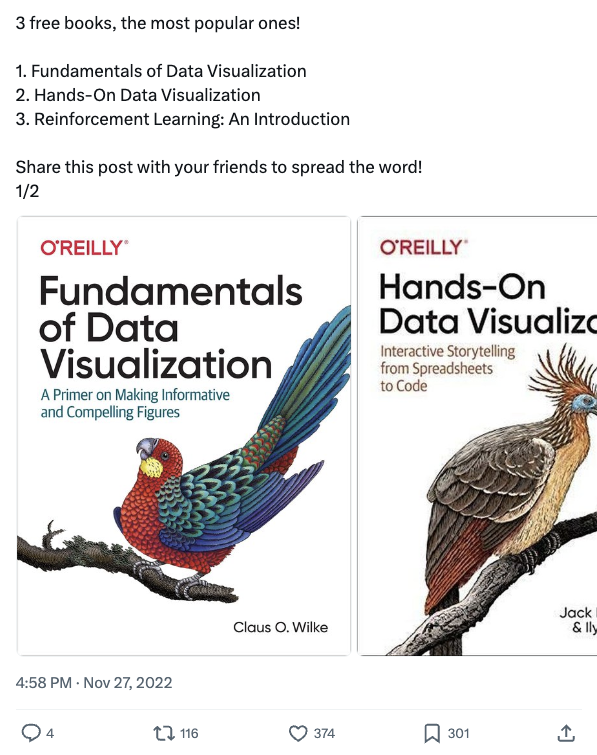
The post packaged immediately useful learning resources in a format designed to earn saves and shares.
- Format
- Book collection
- Purpose
- Evergreen audience value
- Reported performance
- ~63.5K impressions
Transformer research papers
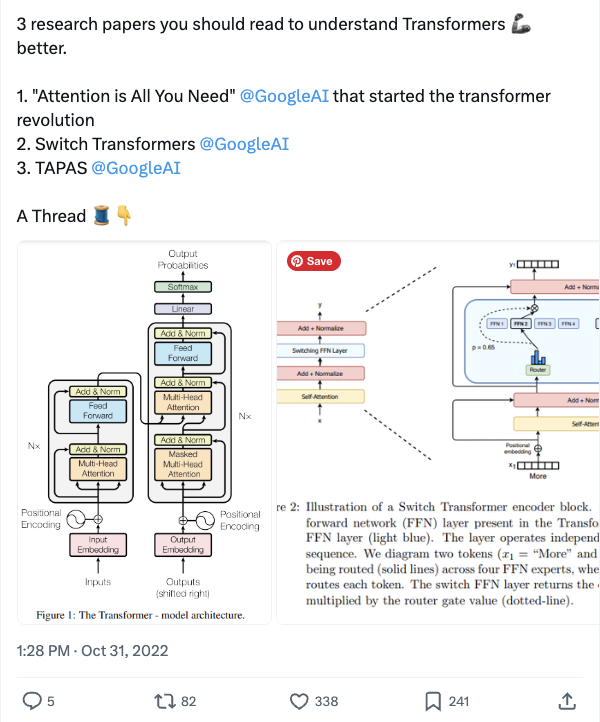
A focused collection gave technically engaged readers a clear starting point for exploring foundational Transformer research.
- Format
- Research collection
- Purpose
- Relevance to a specialized technical audience
- Reported performance
- ~51.3K impressions
AI updates of the week
A compact roundup condensed a busy news cycle into one scannable thread and established a recognizable recurring feature.
- Format
- Weekly news roundup
- Purpose
- Ongoing value for followers
- Reported performance
- ~12.5K impressions
Frequently overlooked facts about ChatGPT
A curiosity-led hook offered another angle on a widely discussed topic and created a clear reason to continue through the thread.
- Format
- Explanatory thread
- Purpose
- Timely AI/ML insight
- Reported performance
- ~10.3K impressions
Results
The chart uses reported milestone values; the starting point is plotted at 700 for scale.
Audience growth
Follower count grew from fewer than 700 to 46,000. The curve was cumulative rather than dependent on one viral spike: weekly gains typically ranged from roughly 600 to 1,300 followers, reaching more than 3,900 new followers in the strongest month.
Reach and traffic
The account generated 20M+ impressions across the work. Monthly impressions increased from roughly 37,000 to a peak of 2.38M—about 64x growth.
Earned authority
The account also started earning organic reshares and engagement from people and organizations the audience already trusted, including Amazon Science, Ai2 (Allen Institute for AI), Hugging Face, Stanford University AI Lab, Harvard University, Gary Marcus, and sktime. Earned mentions grew to about 285 per month, building authority without relying on paid promotion.
LinkedIn launch
Toward the end of the engagement, I helped launch TheSequence's LinkedIn presence and grow it from zero to 2,600 followers.